Waterproofing Before the Wall Exists
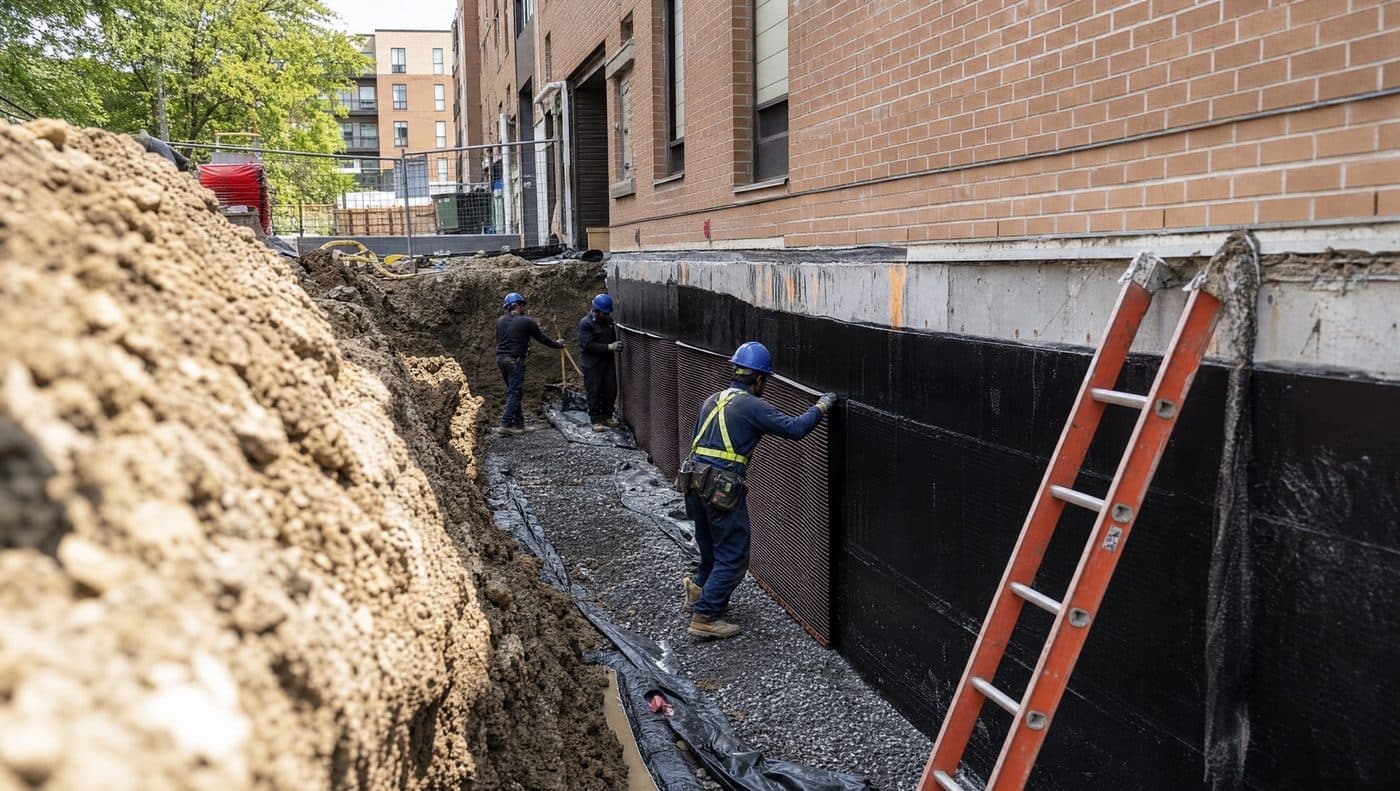
Blindside waterproofing is used when the exterior face of the foundation will be inaccessible after construction, such as zero-lot-line builds, shoring walls, property-line foundations, and below-grade additions. The membrane is installed against the shoring or soil retention system before concrete is placed.
Why Detailing Matters
Blindside systems rely on continuity at seams, tiebacks, penetrations, pile caps, slab transitions, and cold joints. A missed detail can be buried permanently. We treat shop drawings, sequencing, substrate preparation, and inspection points as part of the work, not paperwork after the fact.
Construction Team Coordination
This work needs close coordination with the GC, forming contractor, structural engineer, excavation team, and sometimes the membrane manufacturer. We plan installation around forming cycles and inspection timing so waterproofing does not become the trade holding up concrete.
Systems We Work With
Depending on the design, blindside systems may include pre-applied sheet membranes, bentonite, composite drainage layers, waterstops, injection hose, and joint accessories. We follow project specifications and flag constructability issues early when the detail will be difficult to build as drawn.
Cost Variables
Blindside waterproofing is quoted by the project because access, wall height, shoring condition, penetrations, detailing, and schedule all affect labour. We separate base membrane areas from complex details so GCs and owners understand the cost drivers.
Risk Management
Below-grade leaks after occupancy are expensive because the waterproofing is buried and access is limited. Pre-pour inspection, photo documentation, and manufacturer coordination reduce that risk and create a record of what was installed.
Repair Tie-Ins
Where new blindside work meets existing foundations, we plan tie-ins carefully with injection, waterstop, or compatible membrane transitions. The connection between old and new is often where water finds its way in.
Issues We Hear About Most Often
Boards, property managers, and GCs across the GTA run into the same leak patterns. Here is what usually leads to this service — and how we approach the repair.
The wall cannot be excavated later
Blindside work is used specifically where future exterior access is impossible or extremely expensive.
Sequencing is tight
Waterproofing has to fit forming, reinforcing, inspection, and pour schedules. We coordinate installation around the construction sequence.
Details are buried forever
Tiebacks, penetrations, and cold joints need careful documentation before concrete covers them permanently.
Old and new foundation meet
Tie-ins are common leak points. We plan transitions so the system is continuous across construction phases.
Blindside Across the GTA
Blindside is available across Toronto and the Greater Toronto Area. Crews are routed by region so site reviews and emergency leak calls stay practical: