A Dry Basement Does Not Always Require Excavation
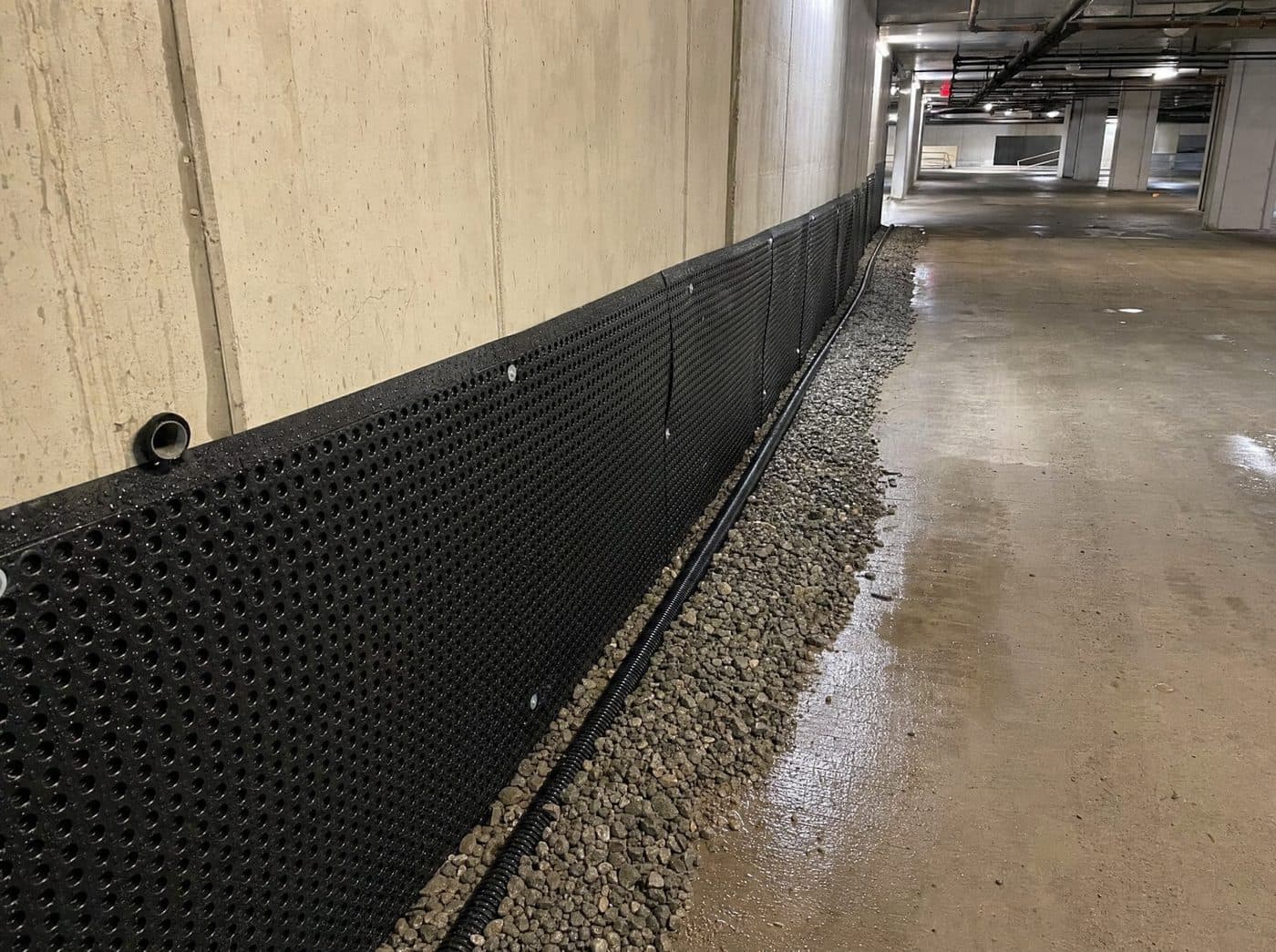
Interior basement waterproofing is often the practical choice for buildings where exterior access is blocked by neighbouring walls, sidewalks, hardscape, utilities, or mature landscaping. The system accepts that water may reach the wall, then collects it behind a membrane and directs it into a drainage channel and sump discharge.
Where Interior Systems Work Best
Interior systems are well-suited for floor-wall seepage, hydrostatic pressure below the slab, inaccessible foundation walls, and phased work in occupied buildings. They are common in Toronto basements, older mixed-use properties, small apartment buildings, and commercial lower levels where excavation would be expensive or disruptive.
What We Install
A typical scope includes saw-cutting the slab perimeter, installing interior weeping tile or drainage channel, applying wall membrane where needed, tying into a sump basin, and restoring concrete neatly. We also review discharge location, backflow risk, pump capacity, and whether battery backup is needed for the building's use.
Costs and Disruption
Interior basement waterproofing usually runs $70 to $150 per linear foot. Straight perimeter runs with open access cost less; finished basements, mechanical rooms, thick slabs, and complex sump routing cost more. Most small-to-mid sized interiors are completed in a few days with dust control and daily clean-up.
Commercial Basement Waterproofing in Toronto
Condo basements, rental lower levels, storage rooms, mechanical rooms, plazas, offices, schools, and mixed-use properties all face water entry differently. The drainage path, sump capacity, and how the building is used determine which interior system makes sense — and we walk through those factors during the site review so nothing is guessed.
Moisture, Mold, and Tenant Complaints
Damp lower levels create odour, ruined finishes, stored goods claims, and tenant complaints. We focus on controlling water movement and humidity at the source instead of masking the smell with paint or dehumidifiers alone.
Warranty and Finish Protection
Eligible waterproofing scopes are backed by clear written warranty language, including transferable 25-year coverage where the assembly and access conditions allow it. We protect floors, isolate dust where practical, remove debris, and leave a clean working area so the building can return to normal use quickly.
Issues We Hear About Most Often
Boards, property managers, and GCs across the GTA run into the same leak patterns. Here is what usually leads to this service — and how we approach the repair.
Excavation is not realistic
Neighbouring buildings, sidewalks, utilities, or landscaping can make exterior work impractical. Interior systems solve many seepage problems without digging up the outside.
The basement smells damp after every storm
Odour usually means moisture is entering or lingering behind finishes. We trace the water path and build a drainage route instead of just covering it.
Tenants need the space back quickly
Interior work can be phased room by room with dust control, slab restoration, and daily clean-up so disruption stays manageable.
The sump system is undersized
A waterproofing system is only as reliable as its discharge path. We check pump capacity, backup power, and where water goes after it leaves the building.
Interior Basement Across the GTA
Interior Basement is available across Toronto and the Greater Toronto Area. Crews are routed by region so site reviews and emergency leak calls stay practical: