Sealants Are Part of the Waterproofing System
Caulking around precast panels, masonry transitions, control joints, balconies, podium details, and roof-to-wall transitions keeps wind-driven rain out of the building envelope. When sealant hardens, splits, debonds, or was installed over dirty surfaces, water gets behind the face quickly.
Remove and Replace, Not Smear Over
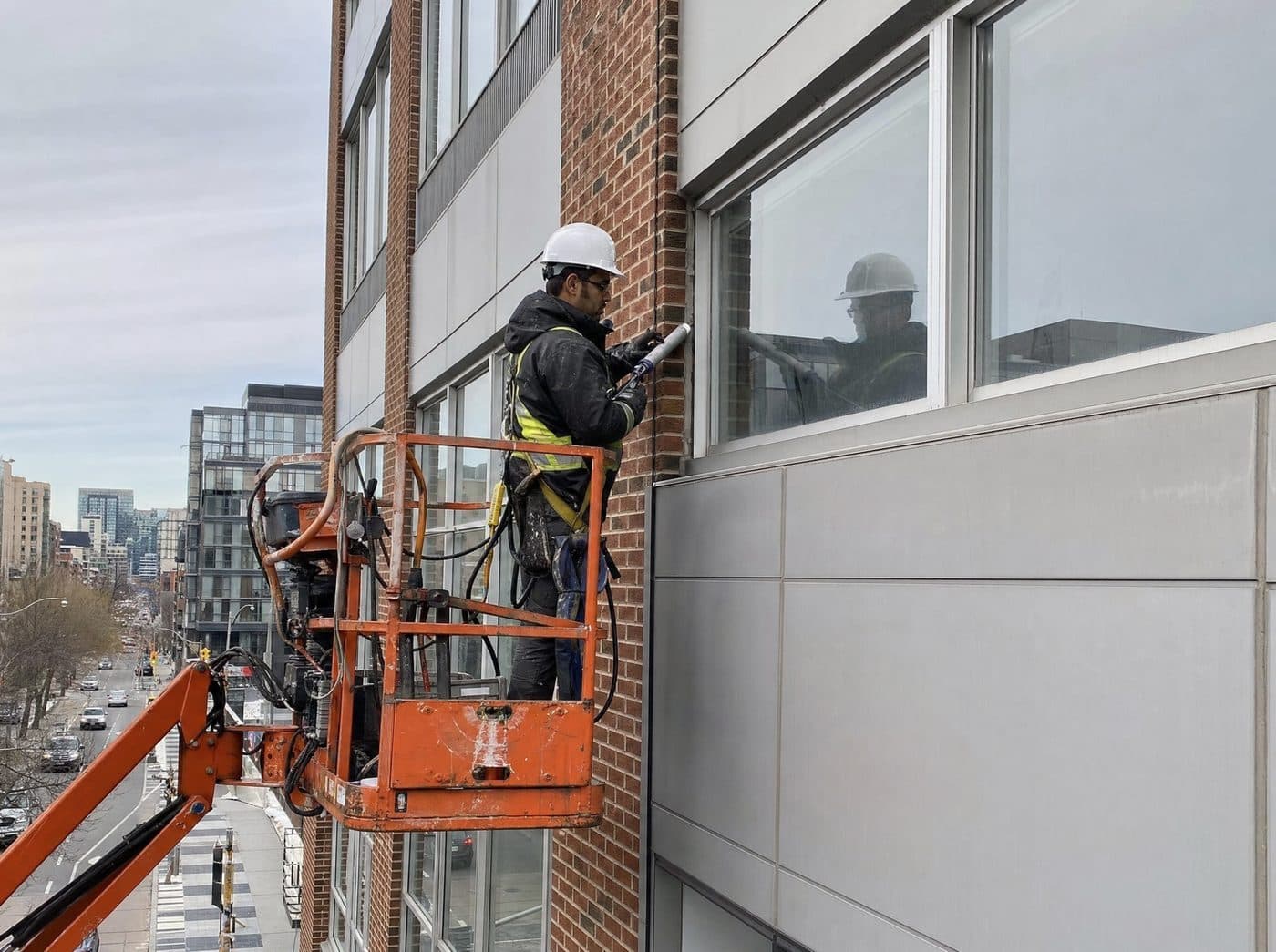
A bead of new caulking over failed old sealant is a short-term cosmetic patch. Proper replacement means removing failed material, cleaning and preparing the joint, installing backer rod where required, priming where specified, and applying compatible sealant at the right depth and profile.
Where We Work
We handle precast joints, masonry control joints, balcony transitions, podium edges, loading areas, facade transitions, and roof-to-wall interfaces. For elevated work, we plan lift, swing stage, or rope access coordination as appropriate for the building.
Leak Investigation
Not every interior stain starts at the nearest visible joint. Water can travel behind cladding, enter higher on the elevation, or show up far from the actual entry point. We review sealant condition, drainage paths, and likely water routes before recommending replacement zones.
Costs and Maintenance Planning
Sealant pricing depends on joint size, access, removal difficulty, height, and volume. Many property managers plan sealant replacement by elevation or priority zone so budgets can be spread over more than one season while the worst failures are handled first.
Material Compatibility
Silicone, polyurethane, hybrid, and specialty sealants behave differently. We choose products based on substrate, movement, exposure, paintability, and manufacturer requirements. Compatibility matters when new sealant meets old systems.
Clean Lines and Clean Sites
Good sealant work should look controlled, not smeared. We protect adjacent surfaces, tool joints cleanly, collect removed material, and leave the site tidy.
Issues We Hear About Most Often
Boards, property managers, and GCs across the GTA run into the same leak patterns. Here is what usually leads to this service — and how we approach the repair.
Leaks only happen during wind-driven rain
That often points to envelope joints, not plumbing or roof drains. Sealant failures can leak only under specific storm conditions.
Old caulking was covered, not removed
Smearing new sealant over failed material rarely lasts. Proper removal and joint prep are what make the repair durable.
The building has hundreds of joints
We prioritize by condition and exposure so property managers can phase work instead of treating the whole building as one emergency.
The leak source is unclear
Water travels behind cladding. We investigate likely paths before replacing sealant blindly.
Caulking & Sealants Across the GTA
Caulking & Sealants is available across Toronto and the Greater Toronto Area. Crews are routed by region so site reviews and emergency leak calls stay practical: